Switch Types: Linear, Tactile & Clicky
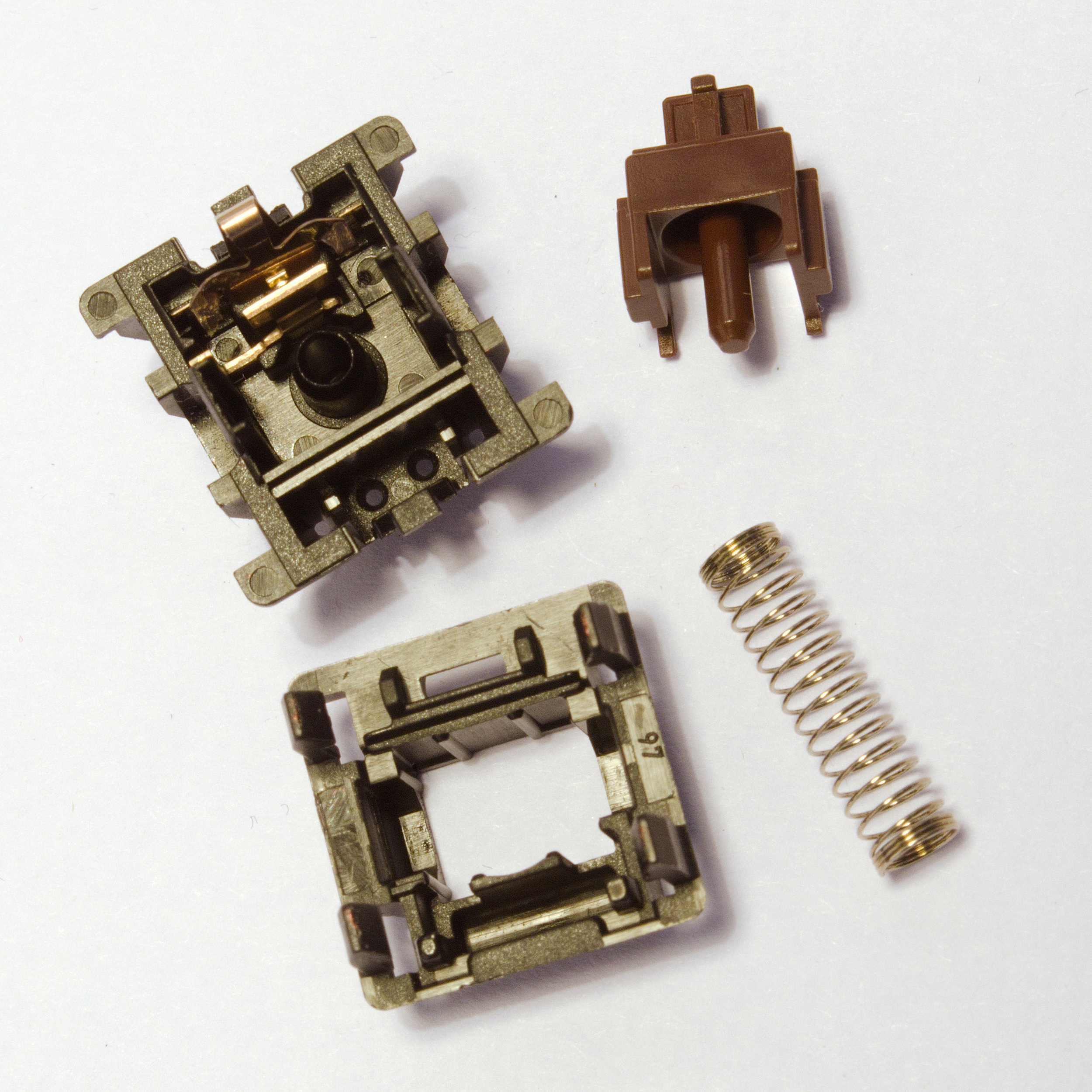
Every mechanical switch falls into one of three behaviour categories: linear, tactile or clicky. The distinction comes down to what happens inside the housing during a keystroke — specifically, whether the stem hits a bump, produces an audible click, or glides straight to the bottom.
Linear Switches
A linear switch travels from top to bottom without any bump or click. The force required increases at a steady rate governed by the spring, which makes the keystroke feel smooth and predictable. Gamers often prefer linears because there is no tactile resistance that could slow rapid key releases.
Popular Linear Models
- Cherry MX Red — 45 cN actuation force, 2.0 mm actuation point, 4.0 mm total travel. The benchmark light linear.
- Gateron Yellow — 50 cN actuation, longer spring that bottoms out more firmly. Widely regarded as a budget-friendly favourite for its smooth housing tolerances.
- Kailh Cream — full POM housing produces a distinctive deep, thocky bottom-out sound. Requires break-in of roughly 50,000 actuations to reach peak smoothness.
Tactile Switches
Tactile switches introduce a bump partway through the keystroke. That bump signals the actuation point, allowing experienced typists to release the key without bottoming out. The result can be a quieter typing experience with reduced finger fatigue over multi-hour sessions.
Popular Tactile Models
- Cherry MX Brown — 55 cN actuation, subtle bump. Often considered a middle-ground switch, though enthusiasts sometimes criticise the bump as too faint.
- Durock T1 — 67 g bottom-out, pronounced rounded bump positioned near the top of the stroke. Well-suited to typists who want clear tactile feedback without pre-travel.
- Holy Panda — originally a combination of Halo stems and Invyr Panda housings, now available as factory-made units. Known for a sharp, snappy bump and a relatively loud bottom-out.
Clicky Switches
Clicky switches combine a tactile bump with an audible click, usually produced by a click jacket or click bar inside the housing. The sound gives an unmistakable confirmation of every registered keystroke, but it also makes these switches conspicuous in shared spaces.
Popular Clicky Models
- Cherry MX Blue — 60 cN actuation, click jacket mechanism. The most recognisable clicky switch, found in many pre-built boards.
- Kailh Box White — uses a click bar instead of a jacket, which produces a sharper, higher-pitched click and more consistent actuation feel.
- Cherry MX Green — 80 cN actuation, heavier variant of the Blue with a stiffer spring. Common in spacebars of boards that use Blues elsewhere.
How to Choose
The decision often comes down to environment and personal typing style. In a shared office, a lubed linear or a moderate tactile keeps noise in check. At home, clicky switches can add a satisfying rhythm without disturbing colleagues. Most vendors in Singapore stock switch testers with six to twelve samples — spending SGD 10–15 on a tester before committing to a full set of 70+ switches can prevent costly regret.
A factory-lubed switch is only as good as its quality control. Inconsistent lube application is the single most common complaint among buyers of pre-lubed budget switches. Hand-lubing with Krytox 205g0 on linears or Tribosys 3203 on tactiles remains the gold standard for a uniform feel.
Switch Comparison Table
| Switch | Type | Actuation | Travel | Sound |
|---|---|---|---|---|
| Cherry MX Red | Linear | 45 cN | 4.0 mm | Quiet |
| Gateron Yellow | Linear | 50 cN | 4.0 mm | Quiet-Medium |
| Cherry MX Brown | Tactile | 55 cN | 4.0 mm | Medium |
| Durock T1 | Tactile | 67 g | 4.0 mm | Medium |
| Cherry MX Blue | Clicky | 60 cN | 4.0 mm | Loud |
| Kailh Box White | Clicky | 50 cN | 3.6 mm | Loud-Sharp |